

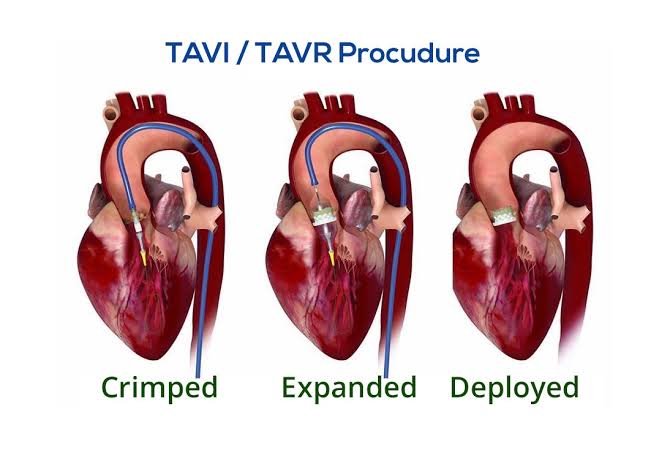
Transcatheter Aortic Valve Implantation (TAVI), also known as Transcatheter Aortic Valve Replacement (TAVR), is a minimally invasive procedure used to replace a severely narrowed aortic valve without the need for open-heart surgery. It is primarily recommended for patients with severe aortic stenosis, a condition in which the aortic valve becomes stiff and calcified, restricting blood flow from the heart to the rest of the body.
During the procedure, a new artificial valve is delivered through a thin catheter, usually inserted through an artery in the groin, and positioned within the diseased valve. Once deployed, the new valve begins functioning immediately, restoring normal blood flow and improving heart function. TAVI/TAVR has transformed the treatment of aortic valve disease by offering faster recovery, less pain, and excellent clinical outcomes, especially in elderly patients and those at increased surgical risk.
TAVI/TAVR may be recommended for patients who have:
Patients requiring TAVI/TAVR commonly experience:
If left untreated, severe aortic stenosis can significantly increase the risk of heart failure and sudden cardiac death.
A thorough evaluation is performed to determine whether TAVI/TAVR is the most suitable treatment. Diagnostic investigations may include:
A multidisciplinary Heart Team carefully reviews all findings to develop the most appropriate treatment plan.
The procedure is performed in a specialized cardiac catheterization laboratory under local anesthesia with conscious sedation or general anesthesia.
A catheter is inserted through the femoral artery in the groin or another suitable access site. The replacement valve, mounted on the catheter, is guided to the diseased aortic valve using advanced imaging techniques. Once correctly positioned, the new valve is expanded, pushing aside the old damaged valve and immediately taking over its function. The catheter is then removed, and the access site is closed.
The entire procedure generally takes between one and two hours, and many patients are able to walk within a day.
TAVI/TAVR offers several important advantages, including:
Most patients recover quickly following the procedure. Hospital discharge typically occurs within one to three days, depending on individual recovery.
Patients are advised to:
Regular echocardiographic follow-up helps ensure the replacement valve continues to function effectively.
Although TAVI/TAVR is considered safe and highly successful, every procedure carries some risks, including:
These risks are minimized through careful patient selection, advanced imaging, and experienced interventional cardiology teams.
TAVI/TAVR has become one of the most significant advancements in structural heart disease treatment. It provides an effective, minimally invasive alternative to conventional open-heart surgery while delivering excellent clinical outcomes. With advanced imaging, precision-guided technology, and expert cardiac care, patients can experience significant symptom relief, improved heart function, and a quicker return to everyday life.
WhatsApp us