
Heart Attack Warning Signs You Should Never Ignore
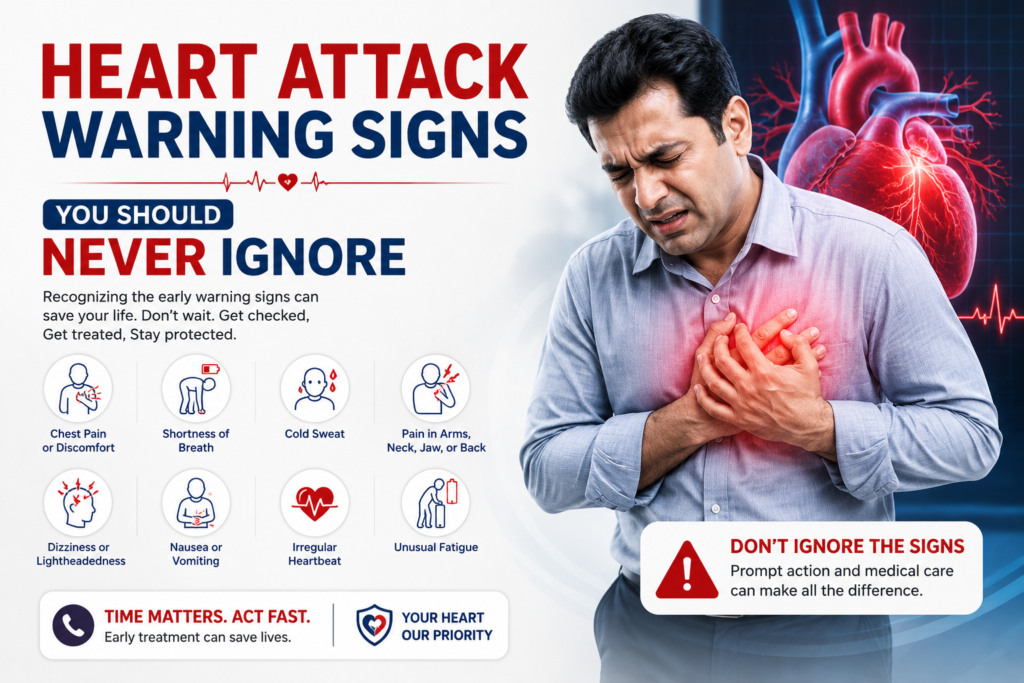
Heart disease remains one of the leading causes of medical emergencies worldwide. A heart attack occurs when blood flow to a part of the heart muscle is blocked, preventing it from receiving oxygen. Recognizing the warning signs early and seeking immediate medical attention can significantly improve outcomes and save lives. What Is a Heart Attack? A heart attack, also known as myocardial infarction, happens when one or more coronary arteries become blocked due to plaque buildup or a blood clot. Without timely treatment, the heart muscle can suffer permanent damage. Common Warning Signs of a Heart Attack 1. Chest Pain or Discomfort The most common symptom is a feeling of pressure, tightness, heaviness, squeezing, or pain in the center or left side of the chest. The discomfort may last for several minutes or come and go. 2. Shortness of Breath Difficulty breathing can occur before or during a heart attack. Some people experience breathlessness even without chest pain. 3. Pain Radiating to Other Areas Heart attack pain may spread to: 4. Excessive Sweating Sudden cold sweats without physical exertion can be an important warning sign, especially when accompanied by chest discomfort. 5. Nausea or Vomiting Some individuals may experience nausea, indigestion, stomach discomfort, or vomiting, particularly women and older adults. 6. Dizziness or Lightheadedness Feeling faint, weak, or dizzy may indicate reduced blood flow and should never be ignored. 7. Unusual Fatigue Persistent and unexplained fatigue, especially in women, may occur days or weeks before a heart attack. Symptoms May Differ in Women Women may experience less obvious symptoms such as: Because these symptoms can be subtle, heart attacks in women are sometimes recognized later than in men. Who Is at Higher Risk? You may have a higher risk of heart disease if you have: What Should You Do During a Suspected Heart Attack? If you or someone around you experiences symptoms of a heart attack: Early treatment can prevent severe heart damage and improve survival rates. Prevention Tips Conclusion Heart attack symptoms should never be ignored. Chest pain, shortness of breath, excessive sweating, dizziness, and pain spreading to the arms or jaw are important warning signs that require immediate medical attention. Early diagnosis and timely treatment can make a life-saving difference. At Vipanchi Heart Centre & Multispeciality Clinics, we are committed to providing advanced cardiac care, early diagnosis, and expert treatment to help protect your heart health. ❤️
Why Regular Heart Checkups Are Important After Age 40
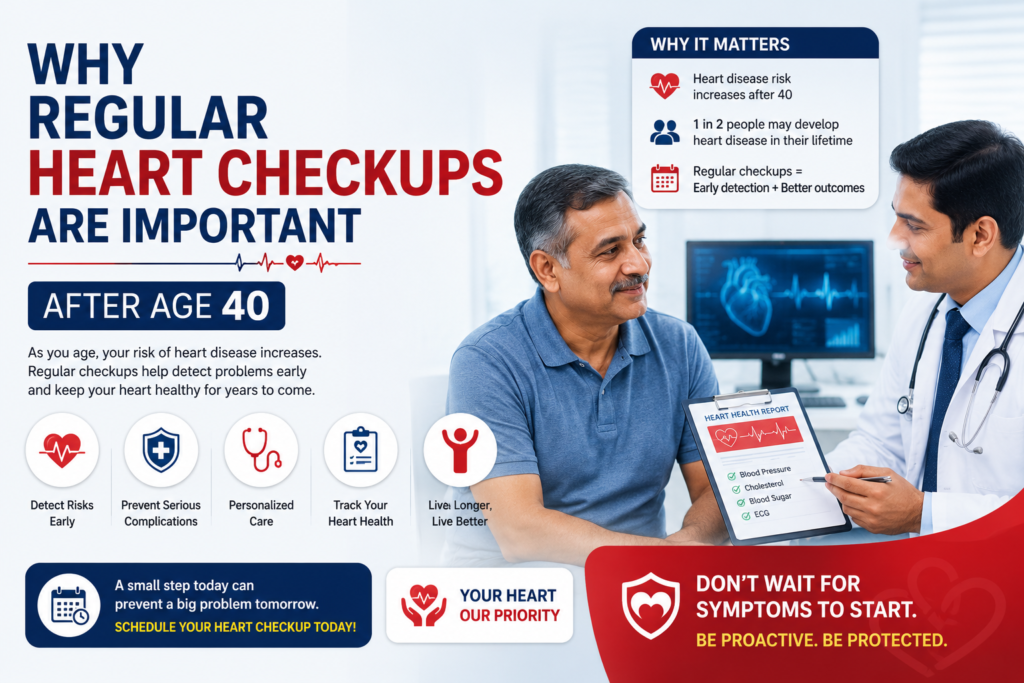
As we grow older, the risk of developing heart disease gradually increases. After the age of 40, changes in blood vessels, metabolism, and lifestyle factors can significantly impact heart health. Many heart conditions develop silently without noticeable symptoms, making regular heart checkups essential for early detection and prevention. Why Does Heart Disease Risk Increase After 40? Several factors contribute to an increased risk of cardiovascular disease after the age of 40, including: Even individuals who feel healthy may have underlying risk factors that can only be identified through routine screening. Benefits of Regular Heart Checkups 1. Early Detection of Hidden Heart Problems Many heart conditions develop gradually and may not show symptoms in the early stages. Regular screenings help identify issues before they become serious. 2. Monitoring Blood Pressure High blood pressure is often called the “silent killer” because it usually has no warning signs. Regular monitoring helps prevent complications such as heart attacks, strokes, and heart failure. 3. Cholesterol Management Elevated cholesterol levels can lead to plaque buildup in the arteries, increasing the risk of coronary artery disease. Heart checkups help assess cholesterol levels and guide treatment if necessary. 4. Diabetes Screening Diabetes significantly increases the risk of heart disease. Routine evaluations help detect diabetes early and ensure proper management. 5. Personalized Risk Assessment A cardiologist can evaluate your overall cardiovascular risk based on age, medical history, family history, lifestyle, and current health status. Recommended Heart Health Tests After 40 Depending on your health profile, your doctor may recommend: These tests help provide a comprehensive understanding of your heart health. Warning Signs You Should Not Ignore Seek medical evaluation if you experience: These symptoms may indicate an underlying heart condition that requires attention. How Often Should You Have a Heart Checkup? For most adults above 40, an annual heart health evaluation is recommended. Individuals with diabetes, hypertension, high cholesterol, obesity, smoking history, or a family history of heart disease may require more frequent monitoring. Tips to Maintain a Healthy Heart Conclusion Regular heart checkups after the age of 40 play a vital role in preventing serious cardiovascular diseases. Early detection, timely intervention, and healthy lifestyle choices can significantly reduce the risk of heart attacks, strokes, and other heart-related complications. At Vipanchi Heart Centre & Multispeciality Clinics, we provide comprehensive heart health evaluations, preventive cardiology services, ECG, 2D Echo, TMT, and expert cardiac consultation to help you stay heart healthy for years to come. ❤️
Managing Diabetes and High Blood Pressure for a Healthier Life
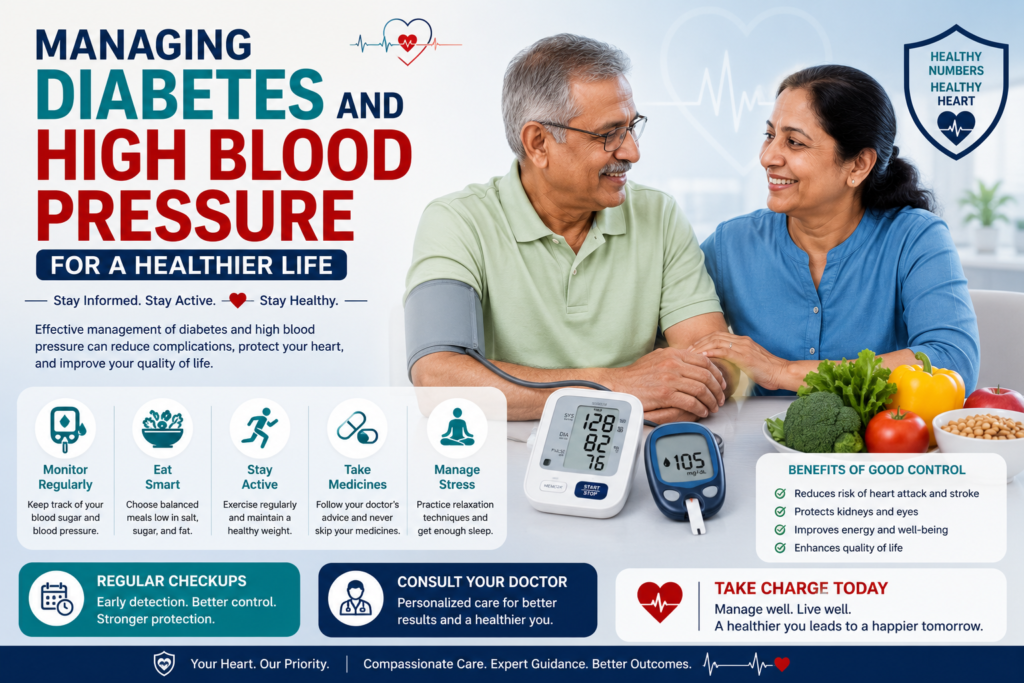
Diabetess and high blood pressure are two of the most common chronic health conditions affecting millions of people worldwide. When left uncontrolled, they can significantly increase the risk of serious complications such as heart disease, stroke, kidney disease, and vision problems. The good news is that with proper management and lifestyle changes, individuals can lead healthy and active lives. Understanding Diabetes and High Blood Pressure Diabetes Diabetes occurs when the body cannot properly regulate blood sugar (glucose) levels. Over time, high blood sugar can damage blood vessels, nerves, kidneys, and other vital organs. High Blood Pressure (Hypertension) High blood pressure develops when the force of blood against artery walls remains consistently elevated. It often has no symptoms but can silently damage the heart, brain, kidneys, and blood vessels. When diabetes and hypertension occur together, the risk of cardiovascular complications increases significantly. Why Proper Management Matters Uncontrolled diabetes and high blood pressure can lead to: Early diagnosis and consistent management can help prevent these complications and improve overall quality of life. Key Steps to Manage Diabetes and High Blood Pressure 1. Follow a Healthy Diet A balanced diet plays a crucial role in controlling both blood sugar and blood pressure. Focus on: Limit: 2. Stay Physically Active Regular exercise helps: Aim for at least 30 minutes of moderate physical activity on most days of the week. 3. Monitor Blood Sugar and Blood Pressure Regularly Keeping track of your readings helps detect changes early and ensures treatment remains effective. Regular monitoring allows healthcare providers to adjust medications and treatment plans when necessary. 4. Maintain a Healthy Weight Even modest weight loss can improve blood sugar control and reduce blood pressure levels. A healthy weight also decreases the risk of cardiovascular disease and other health complications. 5. Take Medications as Prescribed Never stop or change medications without consulting your doctor. Consistent use of prescribed medications helps: 6. Manage Stress Effectively Chronic stress can negatively affect both blood sugar and blood pressure. Helpful stress management techniques include: 7. Avoid Smoking and Excess Alcohol Smoking damages blood vessels and significantly increases the risk of heart disease and stroke. Limiting alcohol intake can also help maintain healthy blood pressure levels. Warning Signs That Require Medical Attention Consult your doctor if you experience: Early medical intervention can prevent serious complications. Regular Health Checkups Are Essential Routine medical evaluations help monitor: Regular checkups allow doctors to detect problems early and provide timely treatment. Conclusion Managing diabetes and high blood pressure requires a combination of healthy lifestyle choices, regular monitoring, medication adherence, and ongoing medical care. With proper management, individuals can significantly reduce their risk of complications and enjoy a healthier, more active life. At Vipanchi Heart Centre & Multispeciality Clinics, we provide comprehensive care for diabetes, hypertension, preventive health screening, and cardiovascular risk assessment to help you achieve long-term health and well-being. ❤️