


Heart disease remains one of the leading causes of medical emergencies worldwide. A heart attack occurs when blood flow to a part of the heart muscle is blocked, preventing it from receiving oxygen. Recognizing the warning signs early and seeking immediate medical attention can significantly improve outcomes and save lives.
What Is a Heart Attack?
A heart attack, also known as myocardial infarction, happens when one or more coronary arteries become blocked due to plaque buildup or a blood clot. Without timely treatment, the heart muscle can suffer permanent damage.
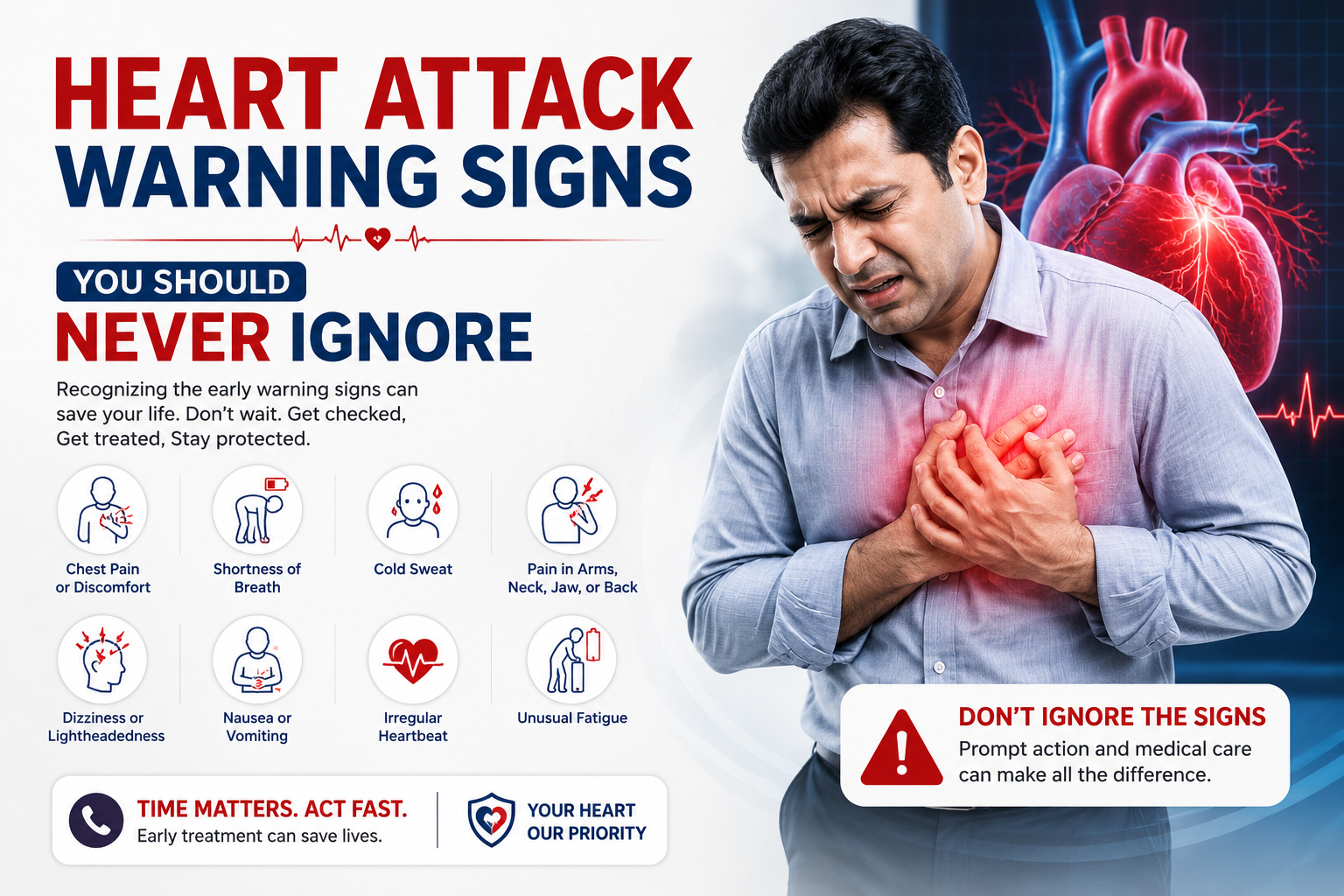
Common Warning Signs of a Heart Attack
1. Chest Pain or Discomfort
The most common symptom is a feeling of pressure, tightness, heaviness, squeezing, or pain in the center or left side of the chest. The discomfort may last for several minutes or come and go.
2. Shortness of Breath
Difficulty breathing can occur before or during a heart attack. Some people experience breathlessness even without chest pain.
3. Pain Radiating to Other Areas
Heart attack pain may spread to:
- Left or right arm
- Shoulders
- Neck
- Jaw
- Upper back
- Upper abdomen
4. Excessive Sweating
Sudden cold sweats without physical exertion can be an important warning sign, especially when accompanied by chest discomfort.
5. Nausea or Vomiting
Some individuals may experience nausea, indigestion, stomach discomfort, or vomiting, particularly women and older adults.
6. Dizziness or Lightheadedness
Feeling faint, weak, or dizzy may indicate reduced blood flow and should never be ignored.
7. Unusual Fatigue
Persistent and unexplained fatigue, especially in women, may occur days or weeks before a heart attack.
Symptoms May Differ in Women
Women may experience less obvious symptoms such as:
- Extreme fatigue
- Shortness of breath
- Nausea
- Back or jaw pain
- Dizziness
Because these symptoms can be subtle, heart attacks in women are sometimes recognized later than in men.
Who Is at Higher Risk?
You may have a higher risk of heart disease if you have:
- High blood pressure
- Diabetes
- High cholesterol
- Smoking habits
- Obesity
- Family history of heart disease
- Sedentary lifestyle
- Chronic stress
What Should You Do During a Suspected Heart Attack?
If you or someone around you experiences symptoms of a heart attack:
- Seek emergency medical help immediately.
- Do not ignore or wait for symptoms to disappear.
- Stay calm and sit or lie down.
- Follow medical advice and emergency instructions promptly.
Early treatment can prevent severe heart damage and improve survival rates.
Prevention Tips
- Maintain a heart-healthy diet
- Exercise regularly
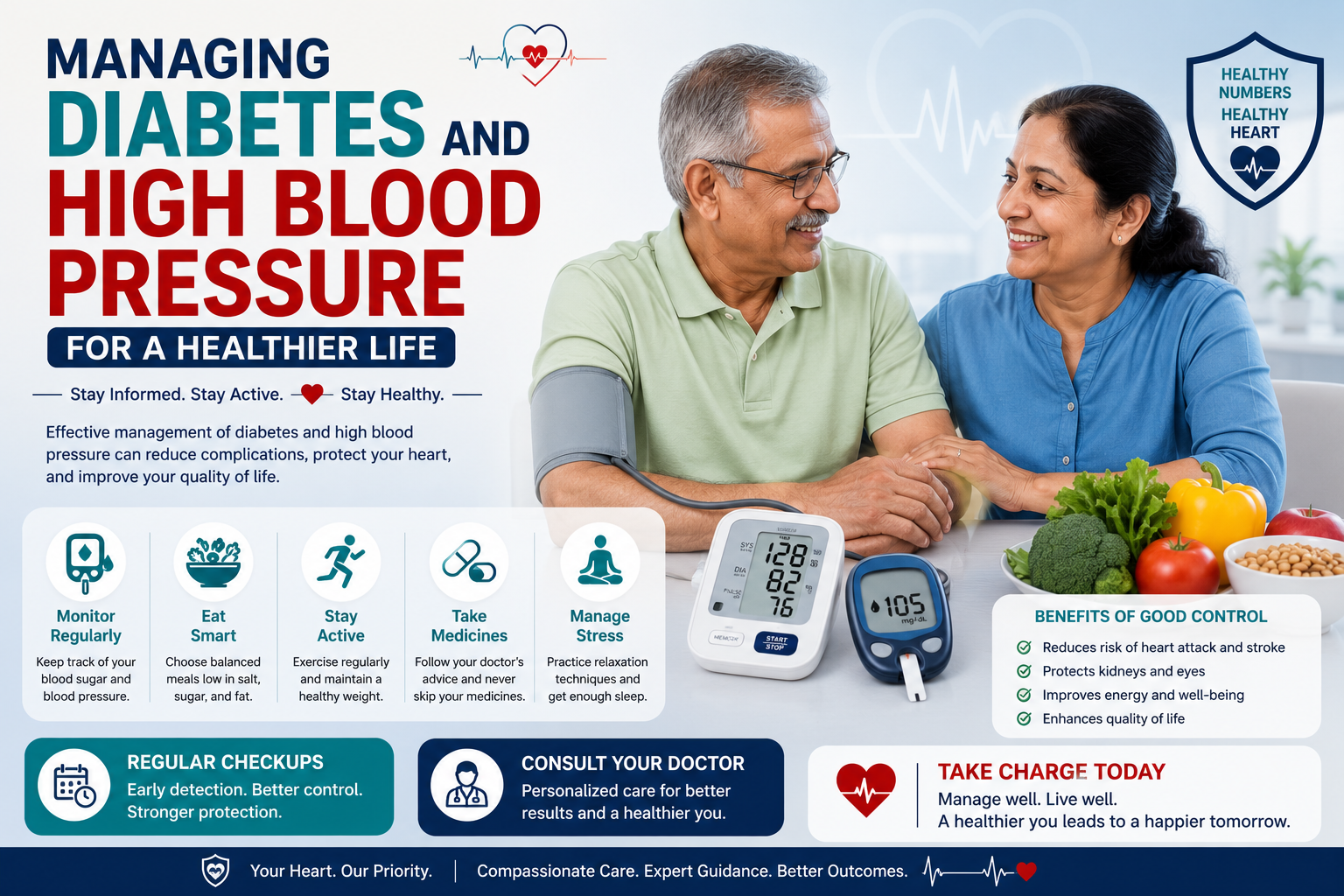
- Control blood pressure, diabetes, and cholesterol
- Avoid smoking and tobacco products
- Manage stress effectively
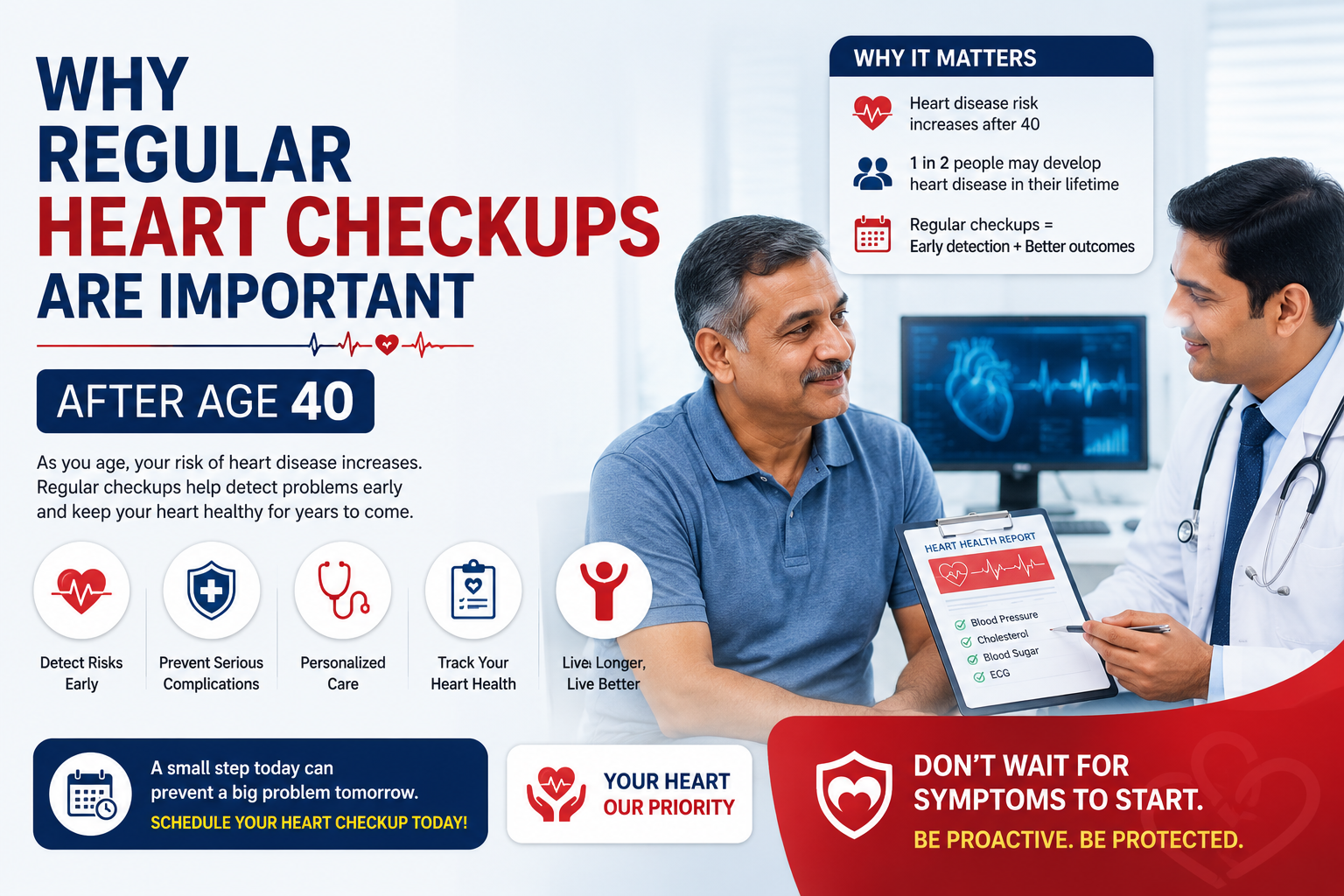
- Schedule regular heart health checkups
Conclusion
Heart attack symptoms should never be ignored. Chest pain, shortness of breath, excessive sweating, dizziness, and pain spreading to the arms or jaw are important warning signs that require immediate medical attention. Early diagnosis and timely treatment can make a life-saving difference.
At Vipanchi Heart Centre & Multispeciality Clinics, we are committed to providing advanced cardiac care, early diagnosis, and expert treatment to help protect your heart health. ❤️