

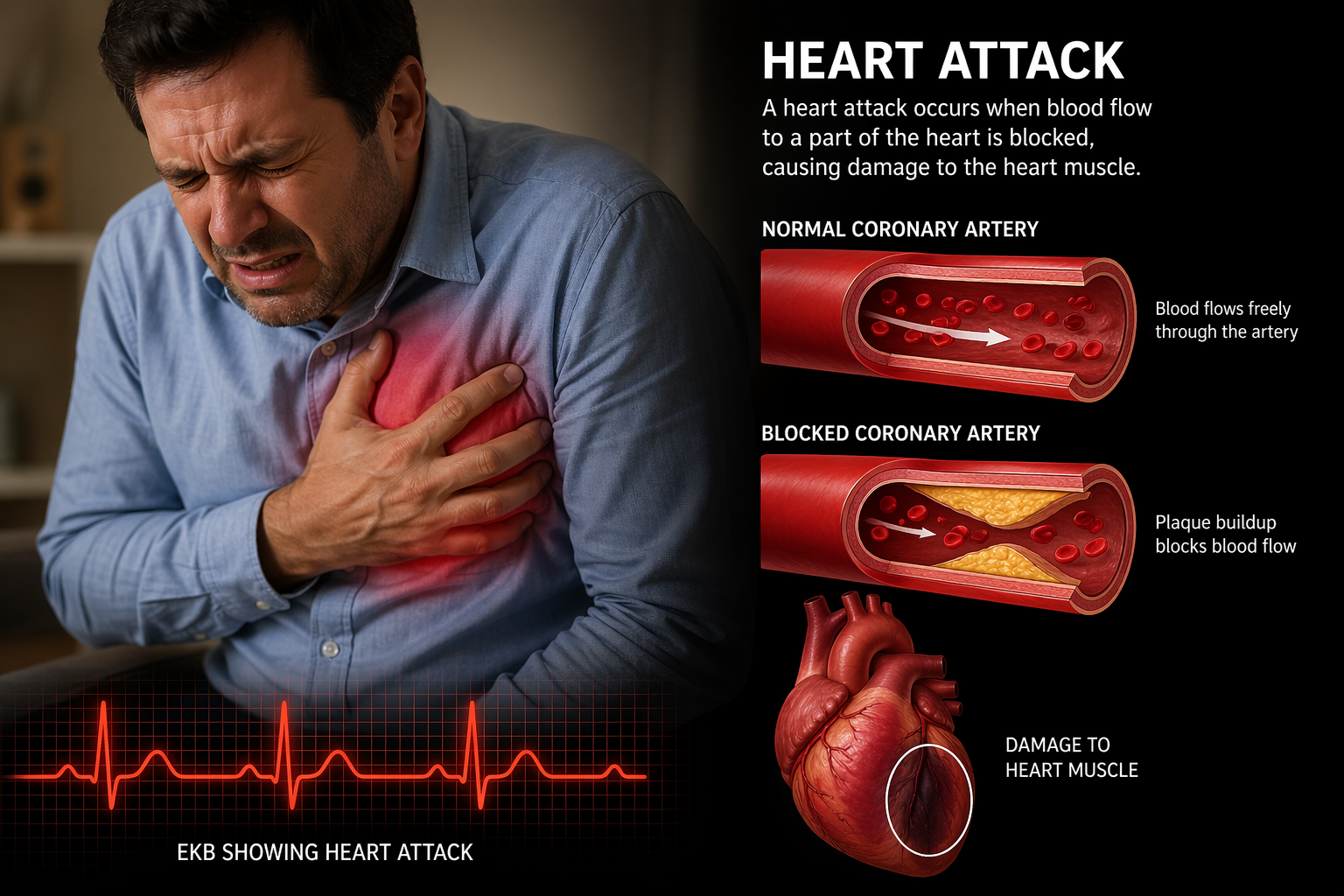
A heart attack, medically known as myocardial infarction, is a serious and potentially life-threatening condition that occurs when the blood supply to a part of the heart muscle is suddenly blocked. This interruption deprives the heart tissue of oxygen, leading to damage or death of the affected muscle. Heart attacks require immediate medical attention, as timely intervention can significantly reduce complications and improve survival outcomes. With advances in cardiology, early diagnosis and effective treatment have greatly improved recovery rates, especially when patients seek care promptly.
The most common cause of a heart attack is the buildup of fatty deposits, known as plaques, within the coronary arteries—a condition called coronary artery disease. Over time, these plaques can rupture, forming a blood clot that blocks blood flow to the heart. Several risk factors contribute to this process, including high blood pressure, high cholesterol, smoking, diabetes, obesity, sedentary lifestyle, and a family history of heart disease. Emotional stress and certain medical conditions can also trigger a heart attack in some individuals.
Heart attack symptoms can vary from person to person, but the most common sign is chest discomfort or pain, often described as pressure, tightness, or a squeezing sensation. This pain may radiate to the arms, neck, jaw, back, or stomach. Other symptoms include shortness of breath, cold sweats, nausea, lightheadedness, and unusual fatigue. In some cases, particularly in women, elderly individuals, and people with diabetes, symptoms may be mild or atypical, making early recognition even more important.
Diagnosing a heart attack involves a combination of clinical evaluation, medical history, and diagnostic tests. An electrocardiogram (ECG) is typically the first test performed to assess the electrical activity of the heart and identify abnormalities. Blood tests are used to detect cardiac biomarkers that indicate heart muscle damage. Additional imaging studies, such as echocardiography or coronary angiography, may be recommended to evaluate heart function and locate blockages in the arteries.
Treatment for a heart attack focuses on restoring blood flow to the affected part of the heart as quickly as possible. Medications such as antiplatelets, anticoagulants, and clot-dissolving drugs are commonly administered in emergency settings. In many cases, procedures like angioplasty and stent placement are performed to open blocked arteries. In more severe situations, coronary artery bypass surgery may be required. The choice of treatment depends on the severity of the blockage, the patient’s overall health, and how quickly care is received.
Recovery after a heart attack involves a comprehensive approach aimed at preventing future cardiac events and improving overall heart health. Patients are typically advised to adopt a heart-healthy lifestyle, including a balanced diet, regular physical activity, and smoking cessation. Cardiac rehabilitation programs play a crucial role in recovery, offering supervised exercise, education, and emotional support. Medications to control blood pressure, cholesterol, and other risk factors are often prescribed as part of long-term management.
If not treated promptly, a heart attack can lead to serious complications such as heart failure, arrhythmias (irregular heartbeats), or damage to heart valves. In some cases, it may result in sudden cardiac arrest. The extent of complications depends on the size of the affected area and the speed of medical intervention. Early treatment significantly reduces the risk of long-term damage and improves the chances of a full recovery.
Immediate medical attention is critical if a heart attack is suspected. Any persistent chest pain, discomfort, or associated symptoms such as breathlessness or dizziness should never be ignored. It is important to seek emergency care without delay, as early treatment can be lifesaving. Individuals with known risk factors or a history of heart disease should also undergo regular check-ups with a cardiologist to monitor their heart health and prevent potential complications.
For expert evaluation and personalized care, consulting an experienced cardiologist like Dr. K. V. Subbarao ensures timely diagnosis, effective treatment, and comprehensive heart health management.
WhatsApp us